Science & Nature
The science behind SELVA
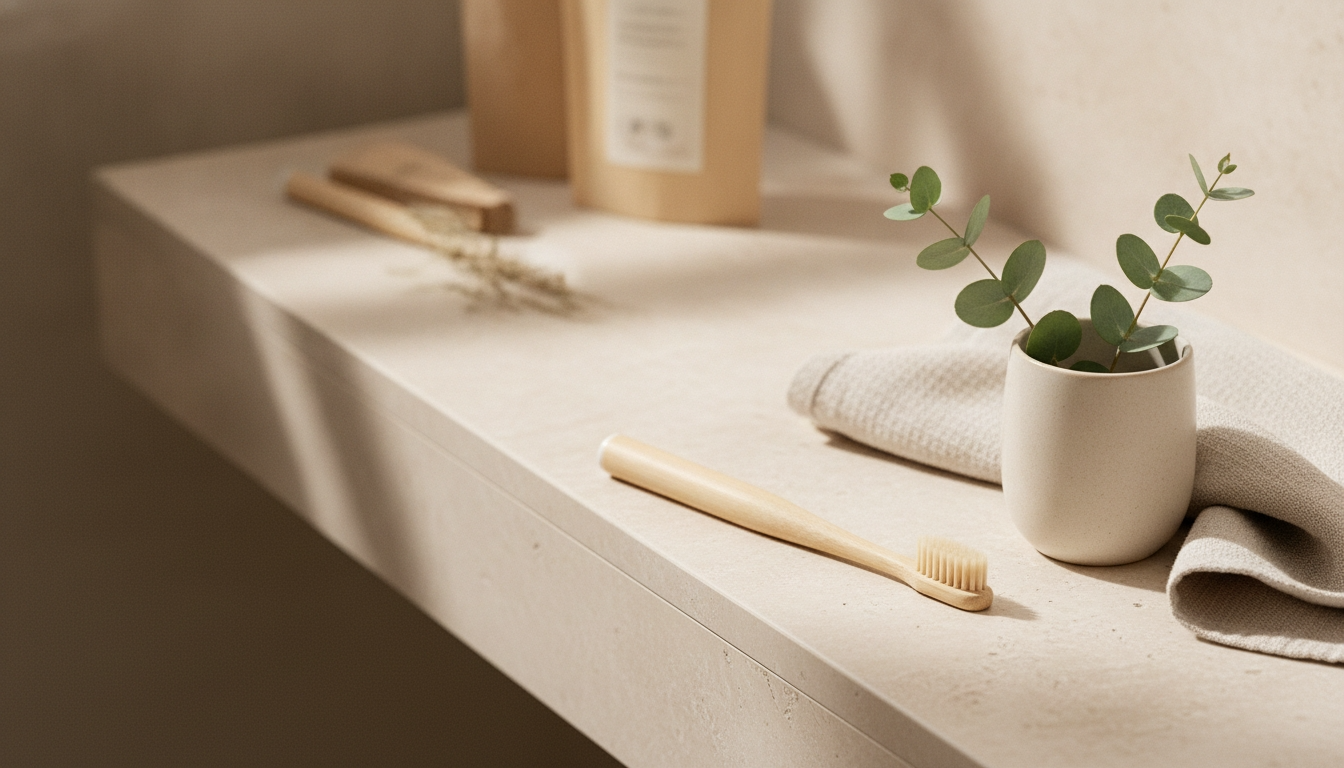
We have made conscious choices about the materials in your toothbrush: bamboo in the handle, natural animal hair bristles instead of nylon. Here's the research behind it.
The problem
The hidden plastic truth
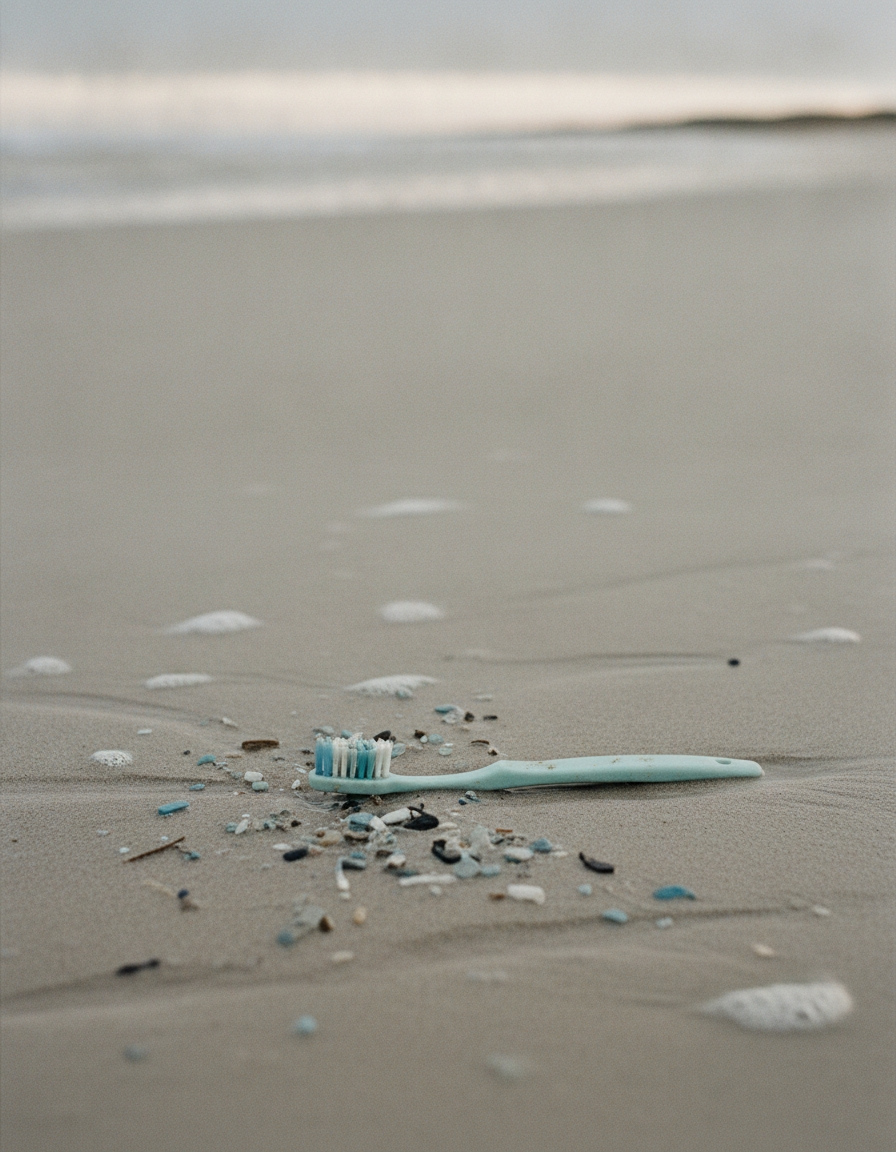
The bristles on a regular toothbrush are typically made of nylon or PBT—synthetic plastic polymers. Every time you brush, the fibers wear down slightly and release microplastics.
Research shows that a regular plastic brush releases between 30 and 120 microplastic particles with each brushing—and up to 2.3 million particles in a year.
Sources: Microchemical Journal (2024) and Ecotoxicology and Environmental Safety (2025).

A small shift. Every morning and evening.
Toothbrushing is one of the most repetitive things we do — twice a day, year after year. That's why what the brush is made of matters.
Materials science
What makes natural bristles different?
Nylon bristles were invented in 1938 and are designed for cheap industrial production. The natural fibres humans have used for centuries have qualities that plastic has never fully replaced.
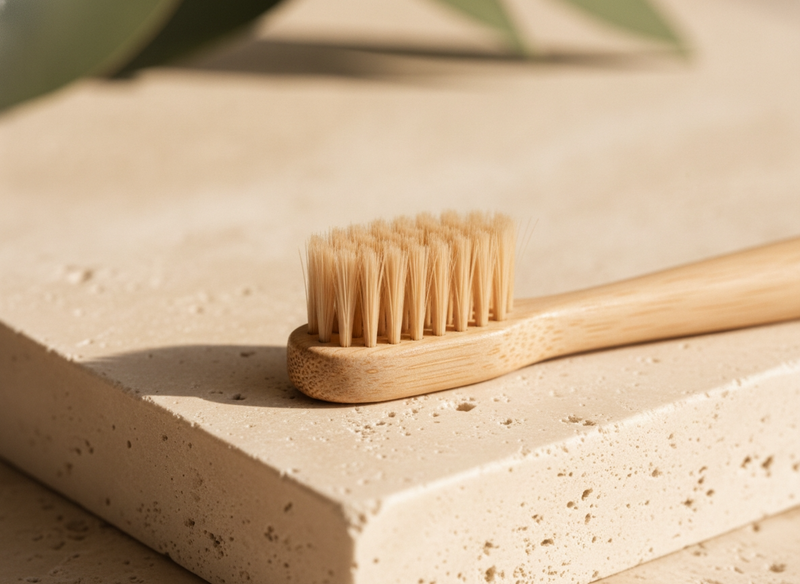
Vildsvinehår
Opbygget af keratin — det samme naturlige protein som i dine negle og dit hår. En smule fastere end hestehår, og helt uden syntetiske plastfibre. Hårene er et biprodukt fra kødproduktionen.
Biologisk nedbrydelig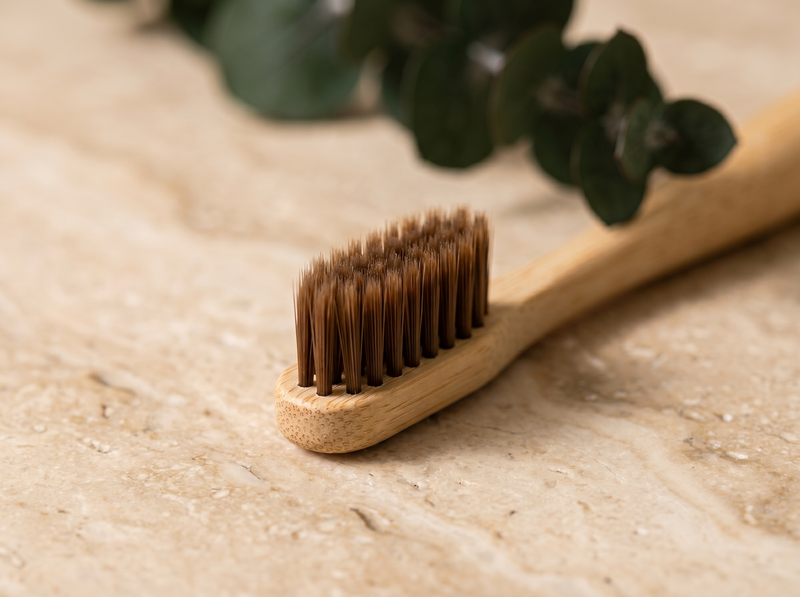
Hestehår
Fra manken, ikke halen — naturligt tyndere og blødere end vildsvinehår. Mange kunder med ømt tandkød foretrækker den bløde fiber. Høstes ved klipning af manken.
Ekstra blød fiber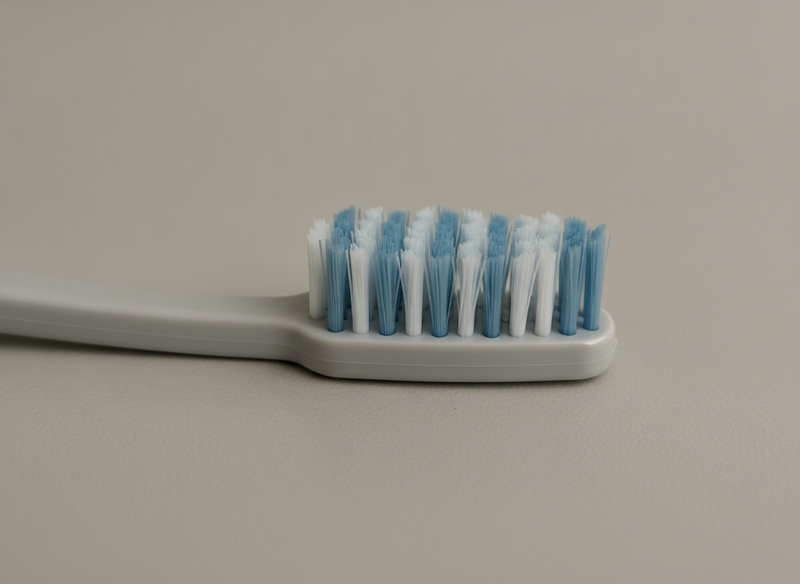
Nylon (standard)
Fremstilles af petroleumsbaserede polymerer. Billige og konsistente, men nedbrydes ikke biologisk. Studier (Microchemical Journal, 2024) viser, at de afgiver mikroplastpartikler ved normal børstning.
Afgiver mikroplast (2024)Why SELVA
Not all toothbrushes are created equal.
Most toothbrushes have nylon bristles — even the "green" bamboo brushes. A bamboo handle was only half the solution. Here's the difference, in concrete, verifiable properties.
| Egenskab | SELVA (Boar / Horse) |
"Grøn" bambusbørste |
Almindelig plastikbørste |
|---|---|---|---|
| Naturlige børstehår (ikke nylon) | ✓ | ✕ | ✕ |
| Bambushåndtag | ✓ | ✓ | ✕ |
| Ingen nylonfibre nogen steder | ✓ | ✕ | ✕ |
| Børster uden syntetisk plast | ✓ | ✕ | ✕ |
| Håndtag kan komposteres | ✓ | ✓ | ✕ |
| Plakfjernelse (PMC, 2025) | Sammenlignelig | Sammenlignelig | Sammenlignelig |
Based on publicly available product information. The comparison is general and does not name specific competitors. Bamboo toothbrushes with nylon bristles are only partially biodegradable — the handle can be composted, but the bristles cannot.
Bamboo
Why we chose bamboo
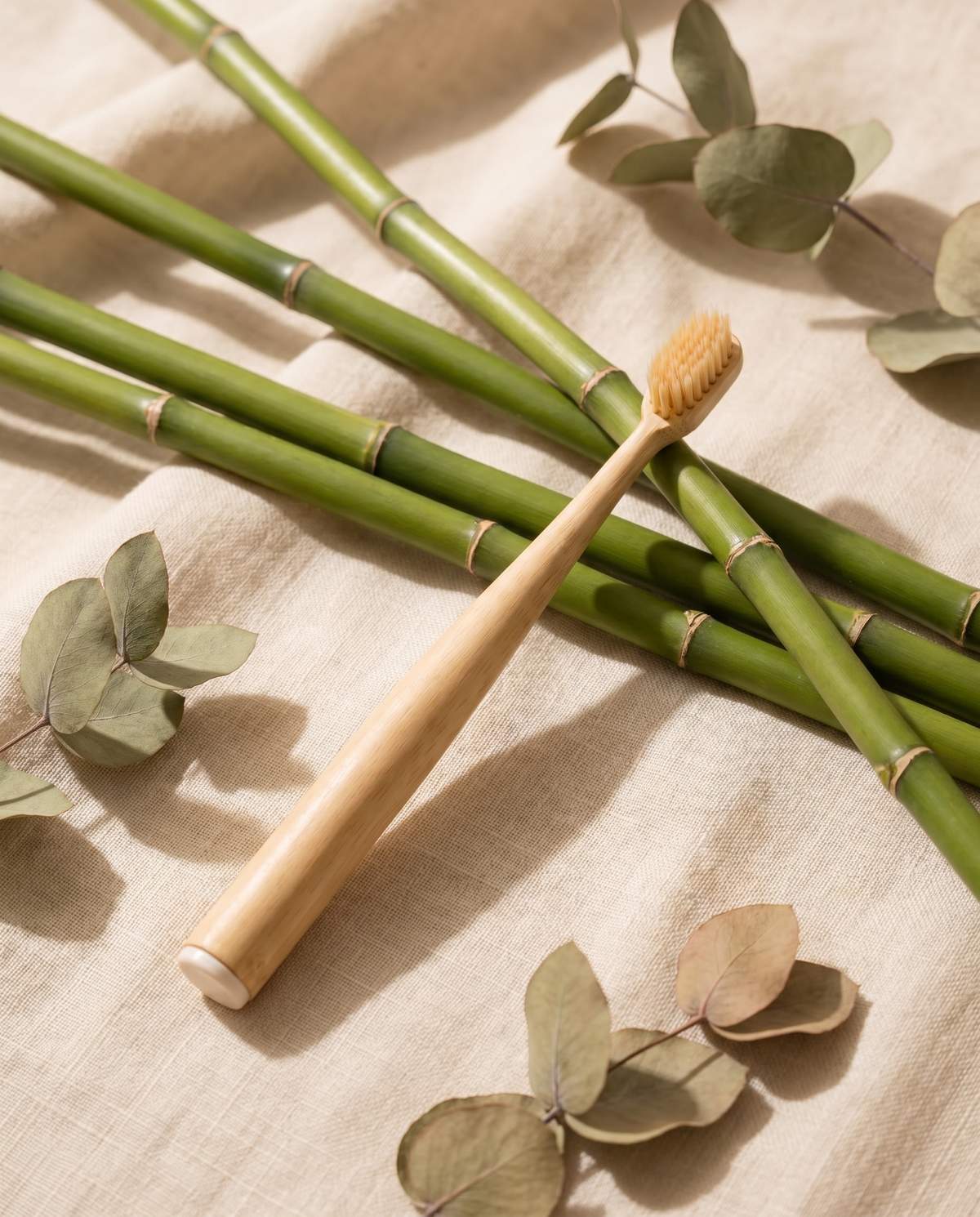
The handle of a SELVA toothbrush is made from bamboo – one of the world's fastest-growing plants. This was a deliberate choice: we wanted to create a handle with no plastic whatsoever.
The bamboo handle is biodegradable and can be composted once the bristles are worn out. A regular plastic handle, on the other hand, will not degrade in nature within a foreseeable timeframe.
SELVA makes no health or antibacterial claims about bamboo. We exclusively share factual material properties: the handle is made from bamboo, it contains no plastic, and it is biodegradable.
— SELVA's princip om dokumenterbar markedsføringScientific basis
What does the research say?
In recent years, an increasing number of peer-reviewed studies have investigated microplastic exposure from toothbrushes. Here's what the research currently shows.
2.3 million particles per year
Wang et al. (2025) found that a single plastic-based toothbrush can release up to 2.3 million microplastic particles per person per year.
Wang et al. (2025), Ecotoxicology and Environmental Safety.30–120 particles per brushing
Microchemical Journal (2024) found that all tested toothbrushes released microplastics — an average of 39, ranging from 30–120 per brushing.
Microchemical Journal (2024), simulated brushing.Microplastics in 80% of blood samples
Leslie et al. (2022) detected microplastics in 80% of the blood samples examined. The study documents widespread exposure — not concrete disease.
Leslie et al. (2022), Environment International, 163, 107199.Raman confirms fragmentation
A Raman imaging (2023) confirmed that plastic bristles fragment and release particles during normal brushing. Nylon was the primary source.
Environmental Pollution (2023), Raman imaging.Bamboo cleans just as well
A comparative study (PMC, 2025) showed that bamboo toothbrushes had comparable efficacy in plaque removal — on par with conventional brushes.
PMC (2025), comparative plaque removal study.Total oral exposure
A systematic review (2024) estimated the annual exposure from toothbrushing to be approximately 48,910 particles per person. Exposure — not disease.
Ecotoxicology and Environmental Safety (2024).Reviews
Our customers say it better than we can
Choose your SELVA
Ready to switch?
Natural materials — bamboo handle and animal hair bristles. No plastic, no nylon. Choose the variant that suits you.
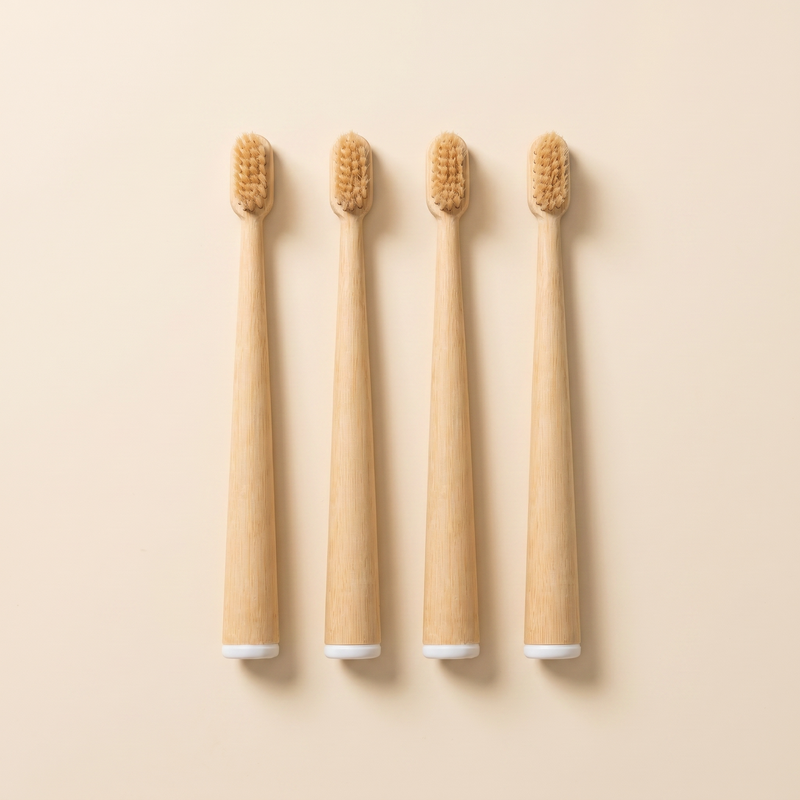
Boar Bristle & Bamboo
Boar bristles — medium-firm brushing for those who want a thorough feel.
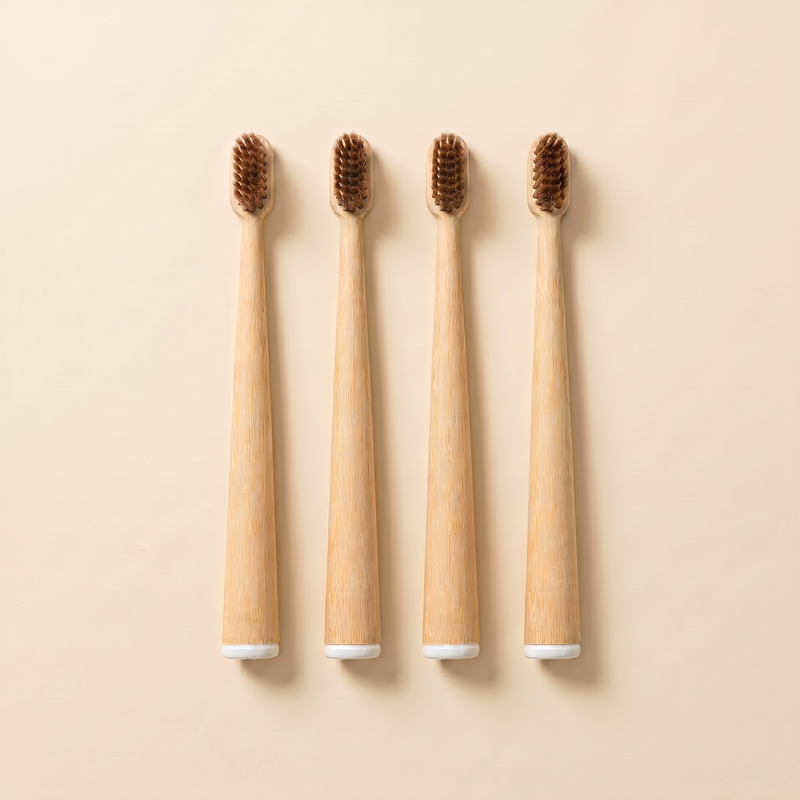
Horse Bristle & Bamboo
Horsetail — extra soft fiber, ideal for sore gums and sensitive teeth.
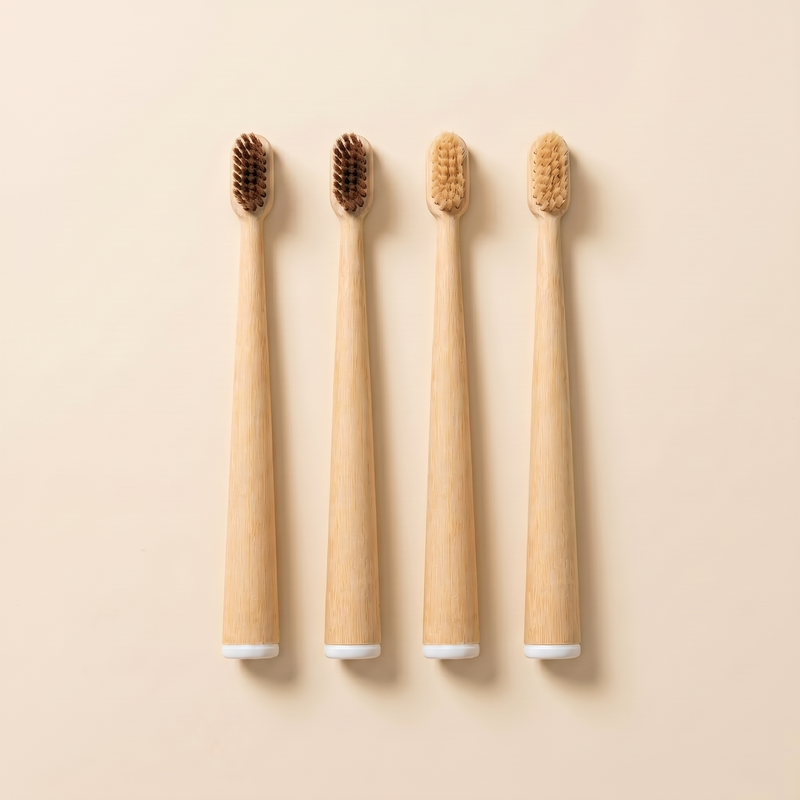
SELVA Family Pack
Boar + Horse in one package — something for the whole family. Save the most.
Gallery
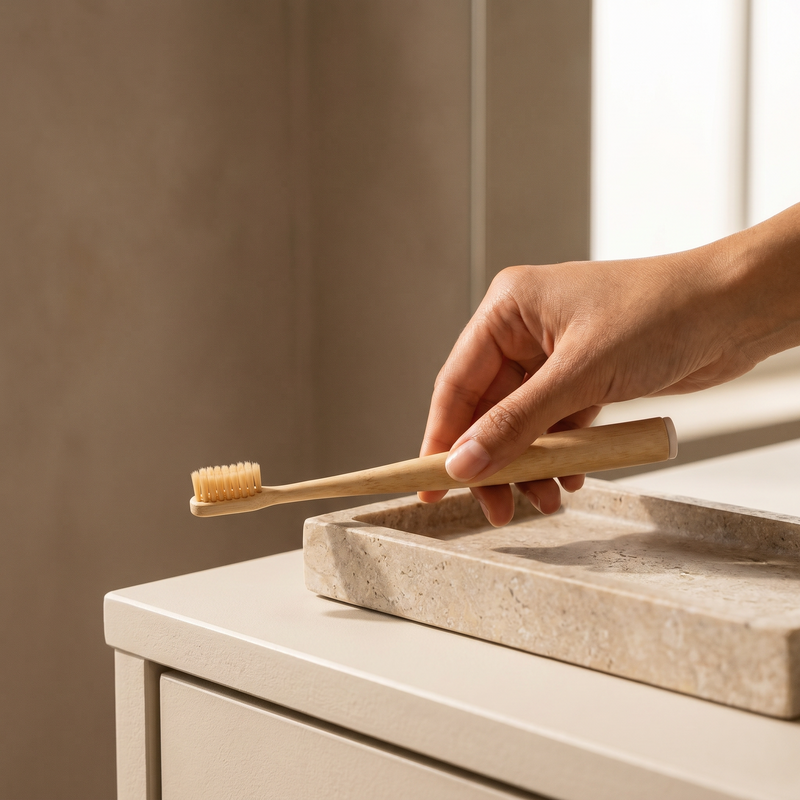
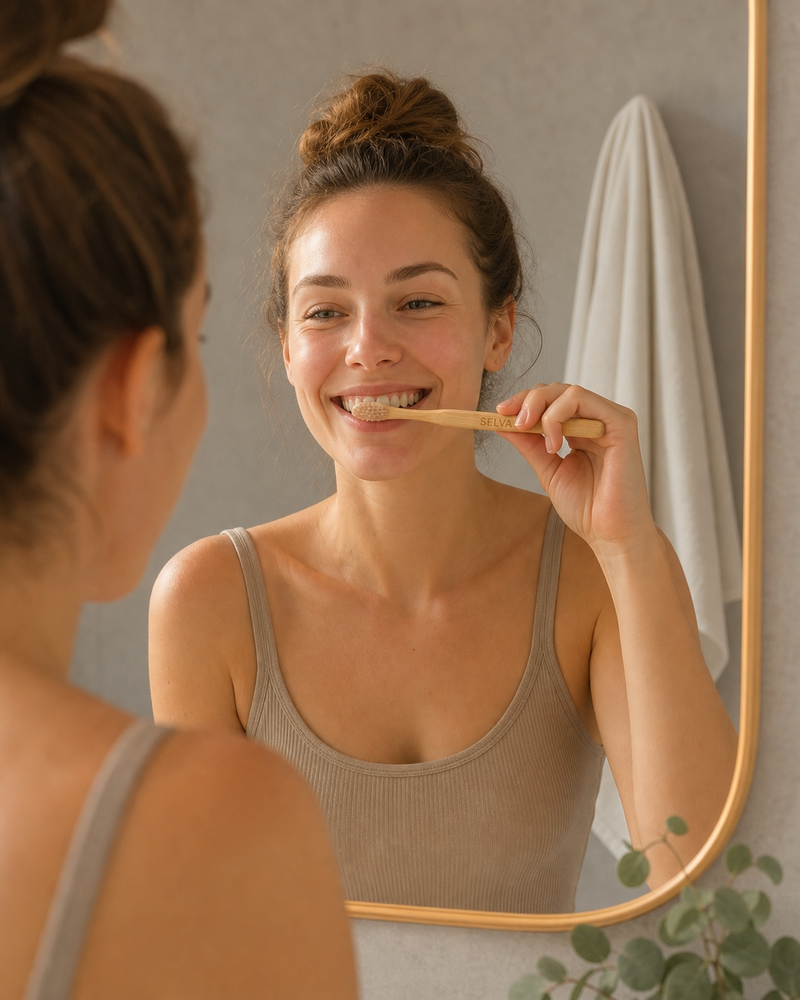
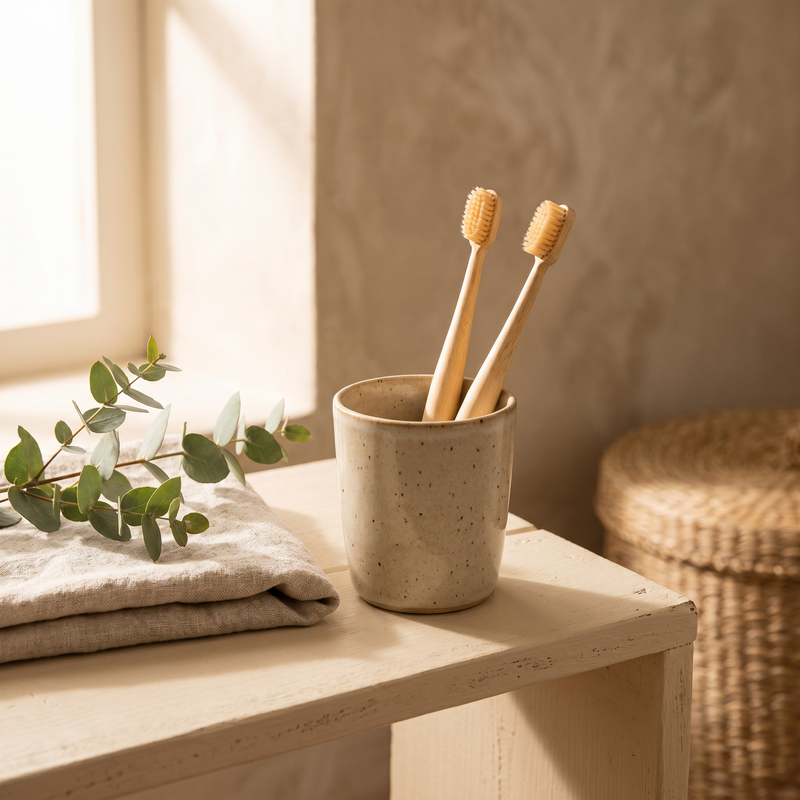
SELVA in everyday life
A look into everyday life with SELVA.

Scientific References
All references are from peer-reviewed journals. SELVA makes no medical health claims and does not claim that microplastics cause specific diseases—the studies cited document exposure.
Ready to switch?
Science is clear. Are you?
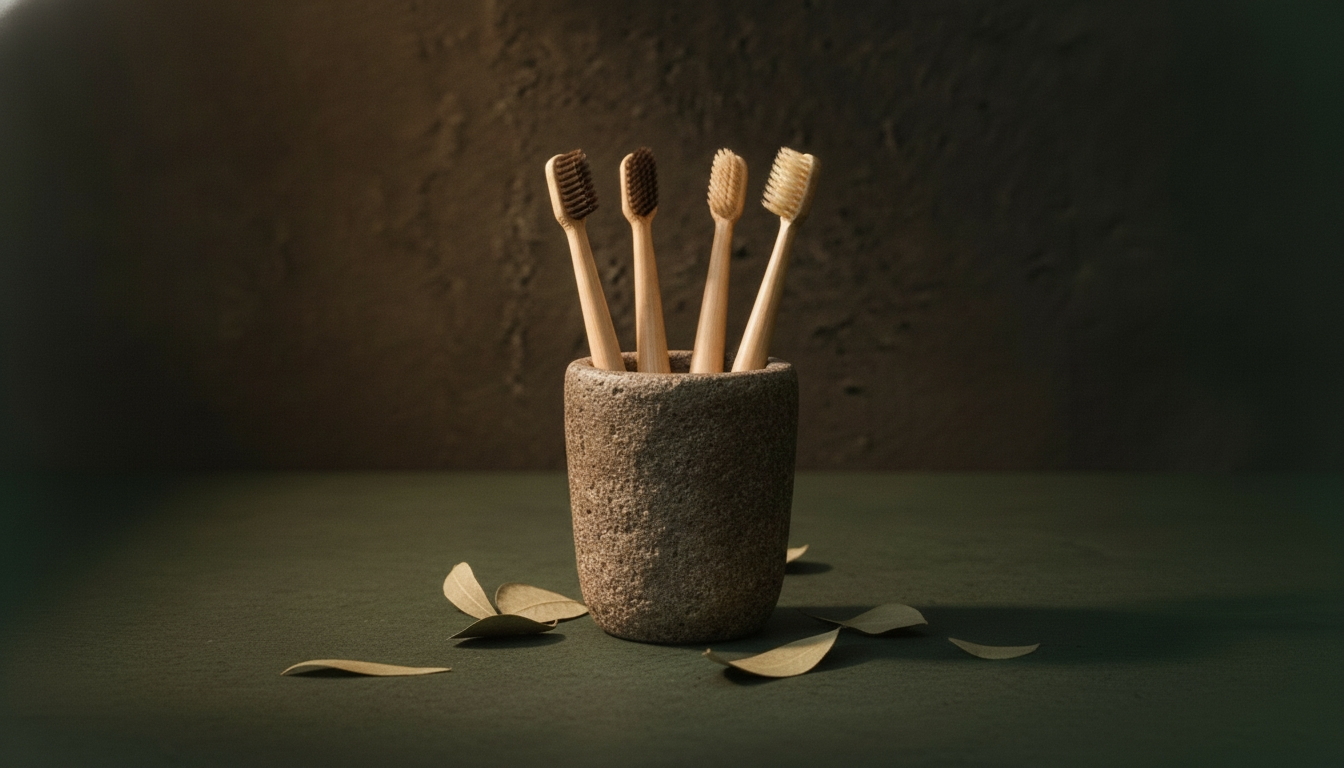
A toothbrush with a bamboo handle and natural animal hair bristles — no nylon fibres, no synthetic plastic. Change one thing in your bathroom and be done with it.