

God kundeservice
God kundeservice, fremragende produkt. Bedste tandbørste jeg nogensinde har haft.
Bianca Marie Larsen
Mest søgt
Vi fandt ikke noget der matcher
Prøv et kortere ord, eller vælg en kategori.
Ingen nylon. Ingen lim. Ingen farvestoffer.
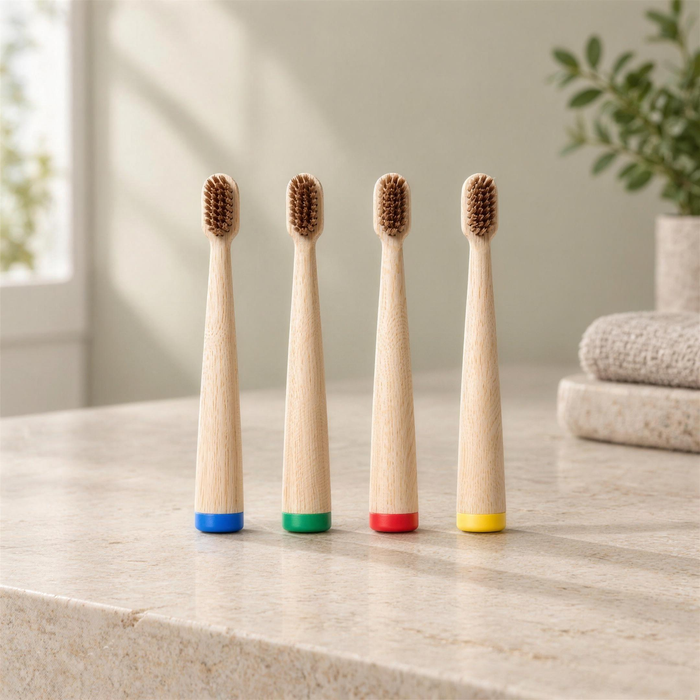
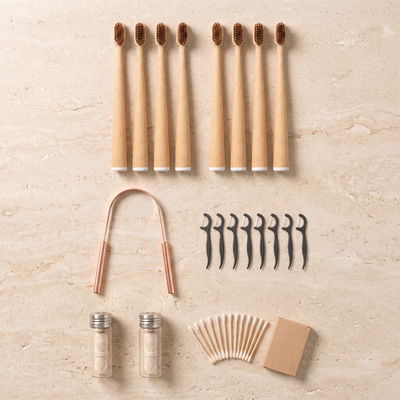
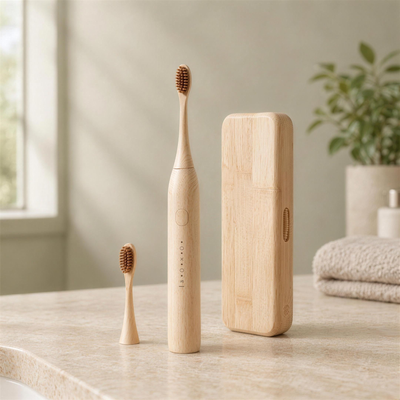
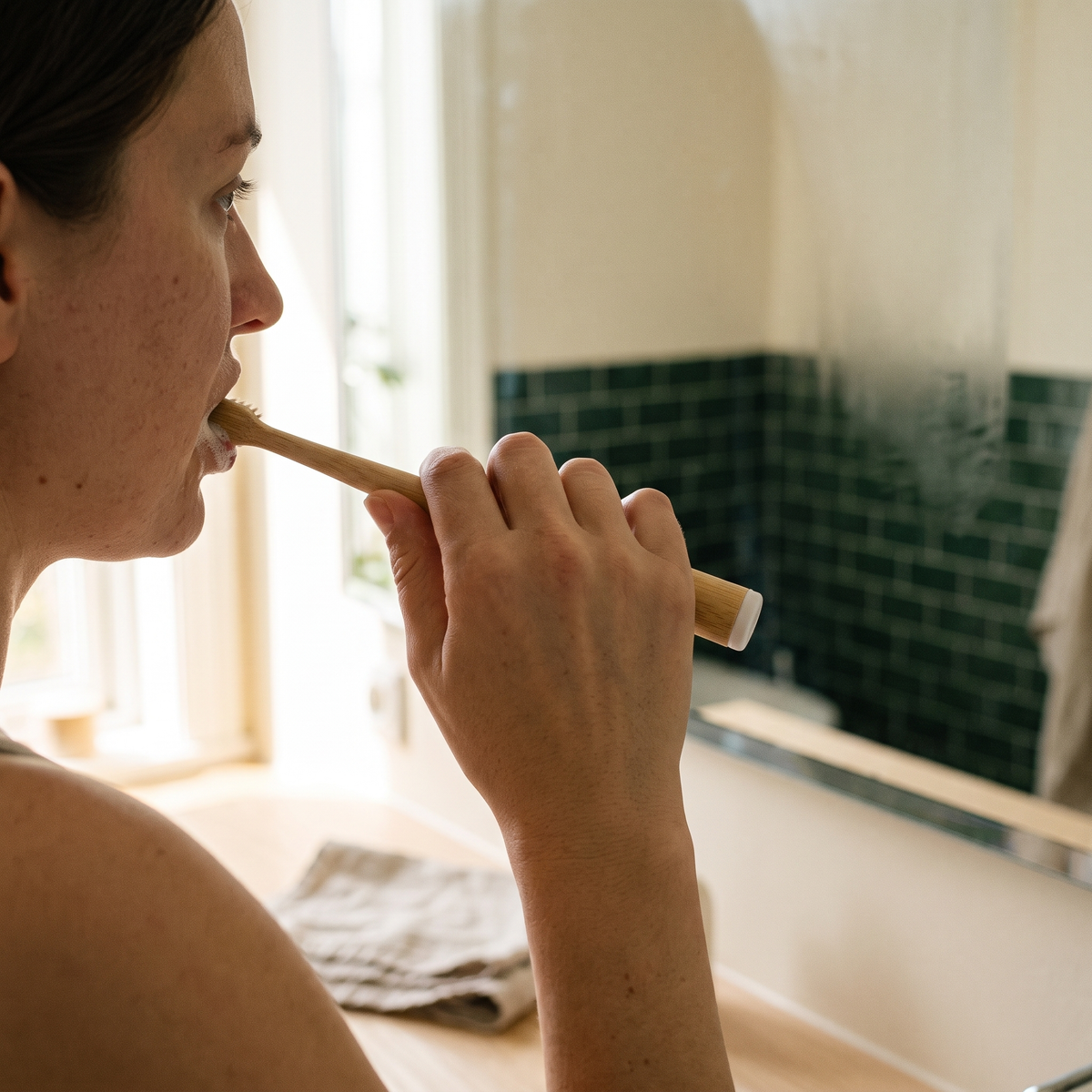
Hårene sidder mekanisk fast i borede huller i et skaft af moso-bambus. Det er hele produktet.

En tandbørste er ikke ét materiale. Her er hvad hver del hos os faktisk er lavet af.
Klippet af manken. Sidder mekanisk fast i borede huller, ingen lim.
19 cm, ubehandlet. Ingen lak, ingen plastikbelægning, intet gummigreb.
Præcis som en almindelig tandbørste. Fire stykker rækker cirka et halvt år.
Ubleget pap uden plastfilm og uden blister. Hele børsten kan komposteres bagefter.
Skaftet, hovedet, hårene og æsken. En bambusbørste løser kun den del, du kan se: skaftet.
Hårene er stadig nylon. Det er dem, der rører tandkødet, to gange om dagen, resten af livet. Forskere anslog i 2025, at en tandbørste afgiver mindst 2,3 millioner mikroplastpartikler om året (studie, 2025).
SELVA bruger naturhår i stedet. Så er der ingen plastik tilbage at slide af.
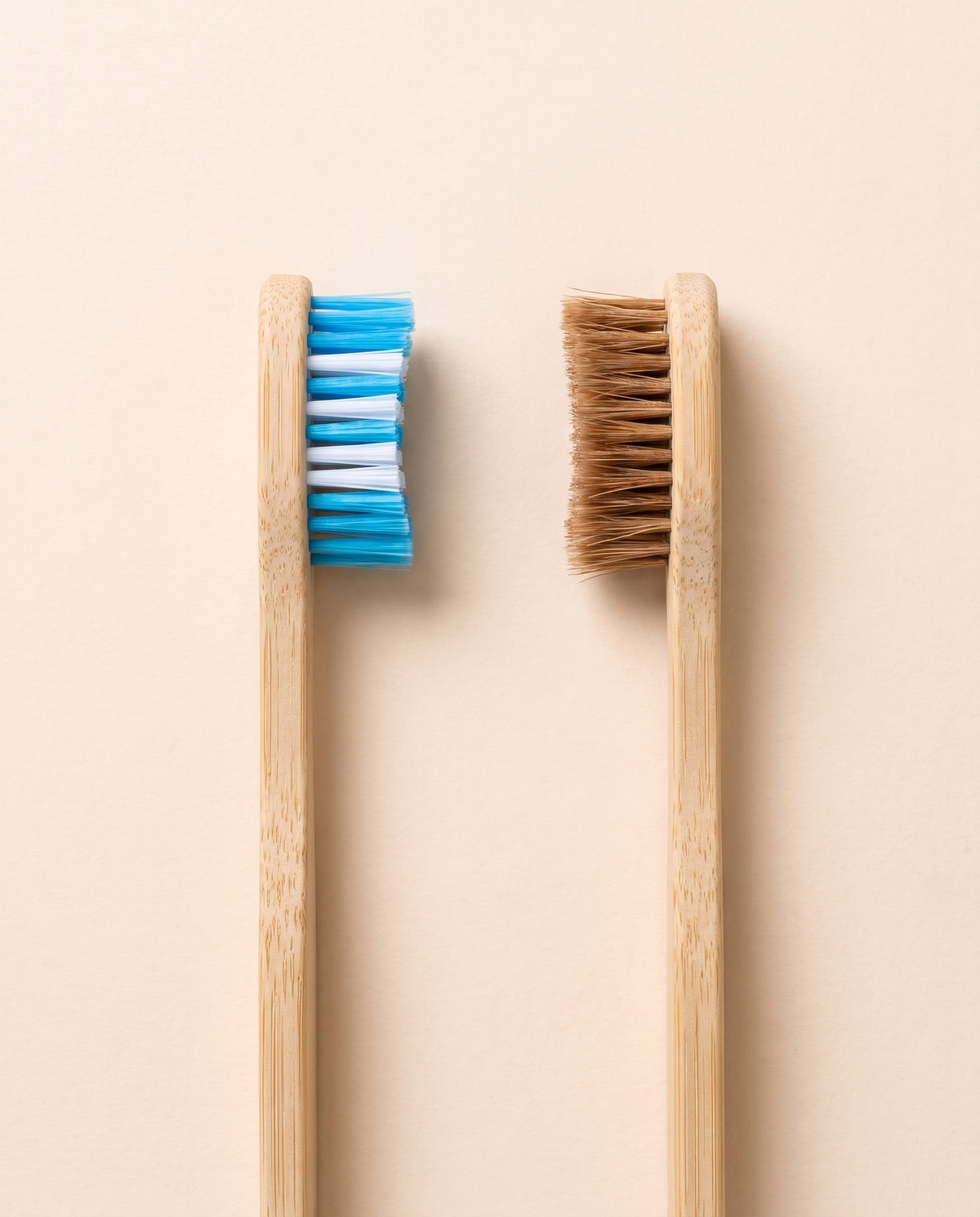
Skaftet er det samme. Forskellen er hårene.
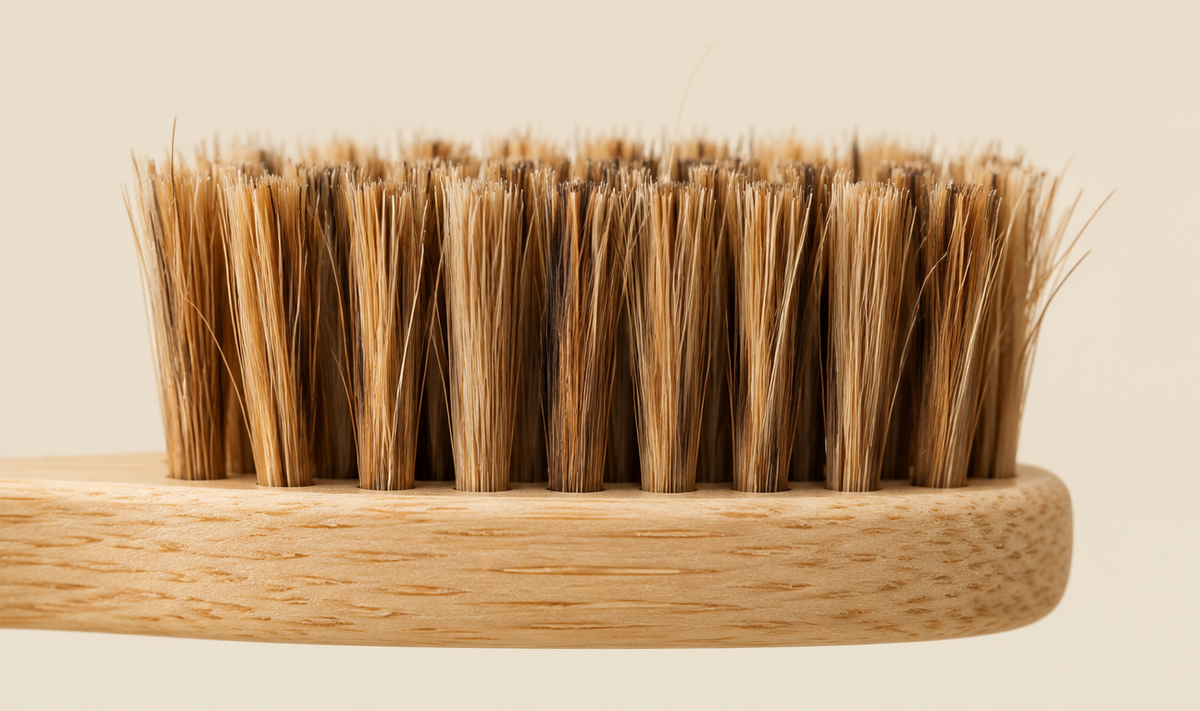
Fastere hår der renser grundigt. Tættest på følelsen af en almindelig medium nylonbørste. Håret bliver klippet af manken, så der dør ingen dyr.
Vælg den hvis
Du bruger en medium nylonbørste i dag og vil have den samme følelse af rent.
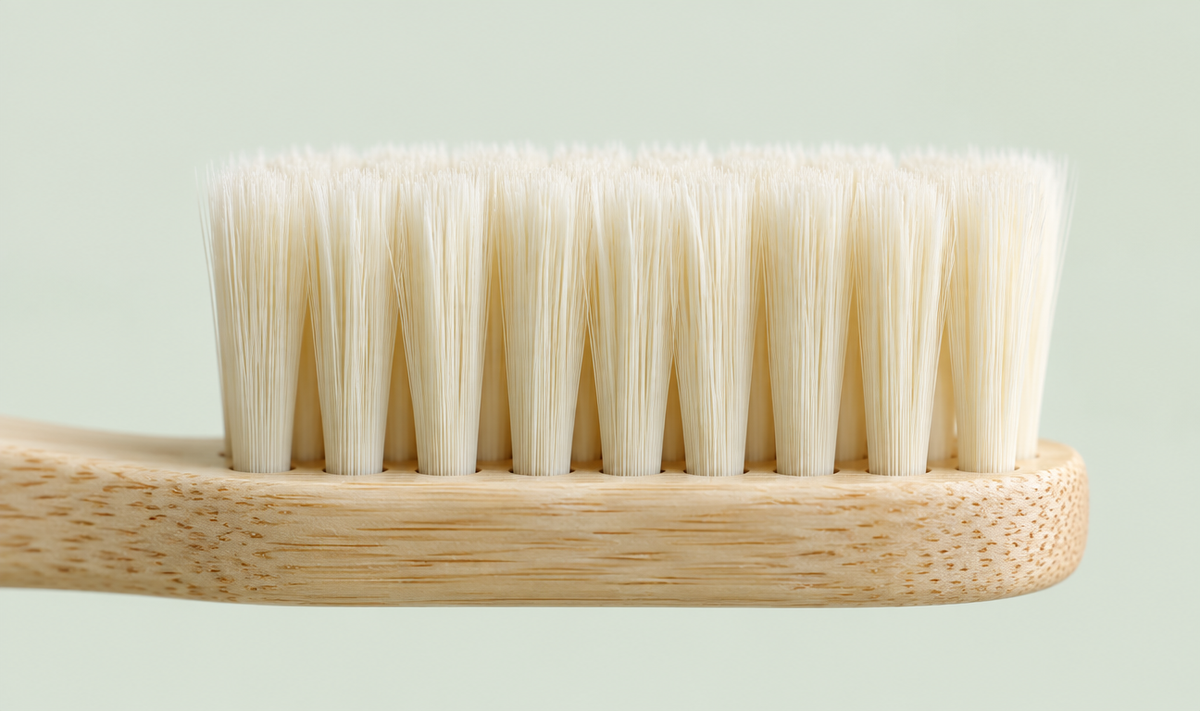
Finere plantehår af bambusfibre. Mildere mod tandkødet og tættest på en blød nylonbørste.
Vælg den hvis
Dit tandkød er sart eller bløder, eller du vil helt uden dyreprodukter.
Sådan bruger du den
Den suger mere vand og tørrer langsommere end nylon. Gør du de her fire ting, holder den fint sine 6-8 uger.
Ryst vandet af lige efter du er færdig. Ikke om aftenen, når du husker det.
Med luft omkring. Ikke i et lukket rejseetui og ikke i en fugtig skuffe.
Eller når hårene begynder at sprede sig. Det er det, der afgør om børsten stadig virker.
Hele børsten. Der er ikke noget du skal pille fra eller sortere fra først.
Vi står inde for hver eneste børste. Derfor har den 30 dages returret: passer den ikke til din mund, siger du til inden for 30 dage, og du får pengene tilbage.
Ingen diskussion og ingen begrundelse. Oveni har du 14 dages fortrydelsesret efter forbrugeraftaleloven og 2 års reklamationsret.
Anmeldelser skrevet af kunder på Trustpilot.
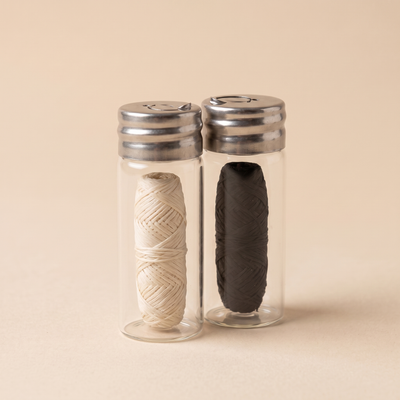
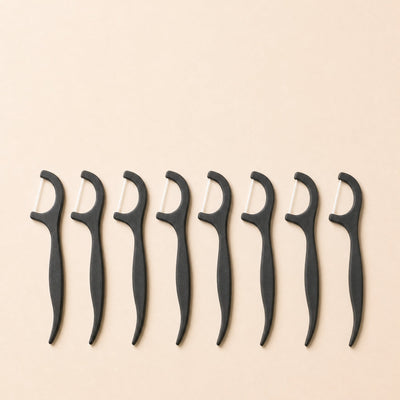
Tandbørsten er starten. Her er resten af munden uden plastik.
Hestehår ligger som en medium tandbørste. Grundig rensning, ikke hård.
Plantehår af bambusfibre er den bløde. Vælg den hvis dit tandkød er sart eller bløder.
Er du i tvivl: hestehår.
Hestehårsbørsten er ikke. Hestene bliver klippet, ligesom når en manke bliver studset, og hårene er et biprodukt fra fødevareindustrien.
Vil du helt uden dyreprodukter, findes samme børste med plantehår af bambusfibre.
Det suger mere vand end nylon og tørrer langsommere. Det skal du vide.
Skyl af efter brug, ryst vandet af, og stil den med hårene opad og luft omkring. Så holder den fint sine 6-8 uger.
Ja. Børnetandbørsten er den samme børste i en mindre størrelse, med samme naturhår og samme bambusskaft.
Læg den i kompostbunken. Håndtag, børstehår og emballage bliver til jord på cirka seks måneder.
Tallet 2,3 millioner kommer fra Ecotoxicology and Environmental Safety (2025): doi.org/10.1016/j.ecoenv.2025.118694
At alle testede tandbørstemærker afgav mikroplast, viser Microchemical Journal (2025): doi.org/10.1016/j.microc.2025.114680
At børstehårene typisk er af polyamid (nylon), står i Miljøstyrelsens kortlægning nr. 42 af tandbørster (2004).
Bambus i skaftet. Naturhår i hårene. Sådan burde den altid have været.
Køb tandbørsten30 dages returret · Fri fragt over 300 kr
You are currently shipping to Denmark and your order will be billed in DKK kr..