Science & nature
The science behind SELVA
We have made deliberate choices about the materials in your toothbrush: bamboo in the handle, natural bristles instead of nylon. Here is the research behind them.
The problem
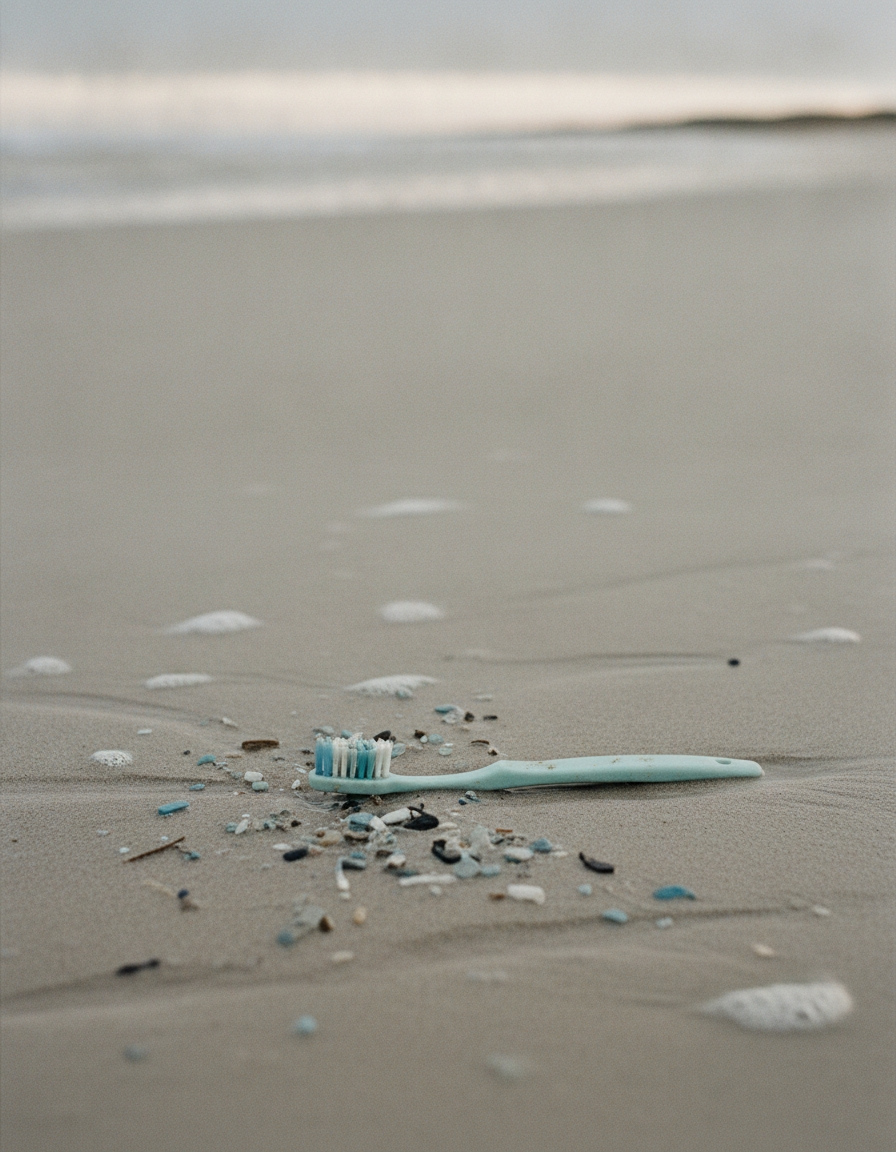
The hidden plastic truth
The bristles on an ordinary toothbrush are typically made of nylon or PBT — synthetic plastic polymers. Every time you brush, the fibres wear down a little and shed microplastic.
Research shows that an ordinary plastic brush releases between 30 and 120 microplastic particles with every single brushing — and up to 2.3 million particles in a year.
Sources: Microchemical Journal (2024) and Ecotoxicology and Environmental Safety (2025).

A small change. Every morning and evening.
Brushing your teeth is one of the most repeated things we do — twice a day, year after year. That is why it matters what the brush is made of.
Materials science
What makes natural bristles different?
Nylon bristles were invented in 1938 and designed for cheap industrial production. The natural fibres people have used for centuries have properties plastic has never fully replaced.
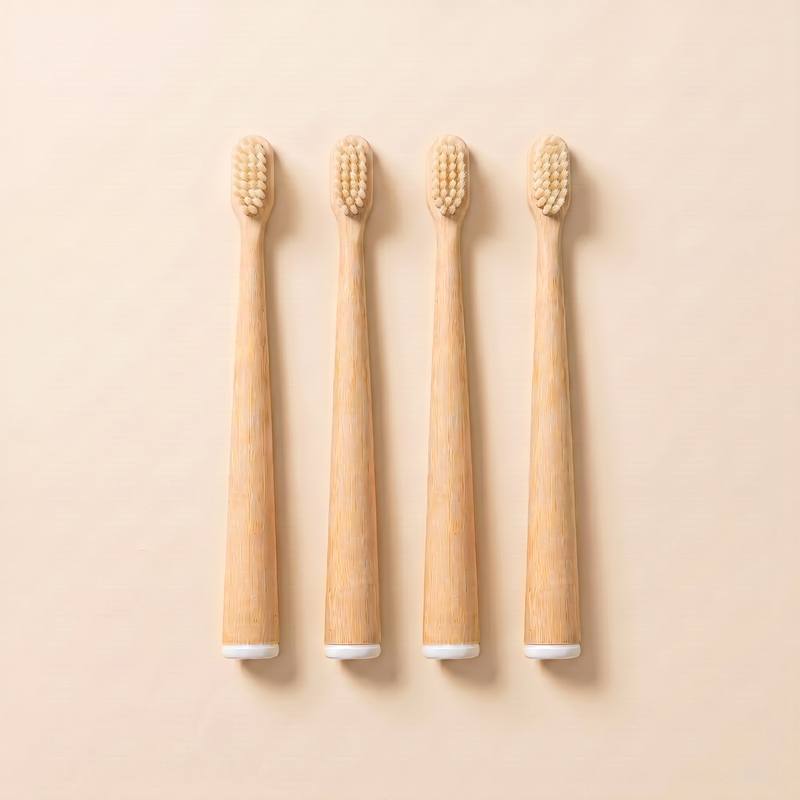
Bamboo fibre
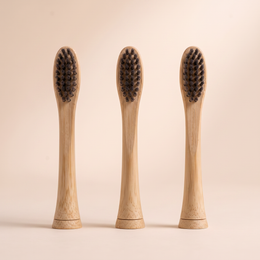
Bristles made from bamboo fibre instead of animal hair — the softer of our two brushes. Same handle, same price, gentle on tender gums and sensitive teeth, with no animal products and not a single synthetic plastic fibre.
100% plant-based · soft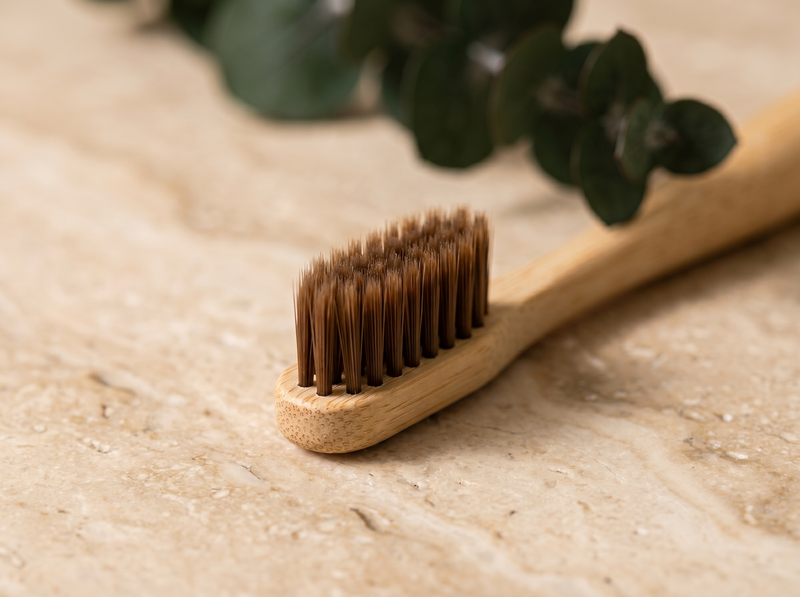
Horsehair
From the mane, not the tail — a naturally fine fibre with a little more bite than bamboo. A thorough clean, and the brush we have tested most. Harvested by trimming the mane.
Medium fibre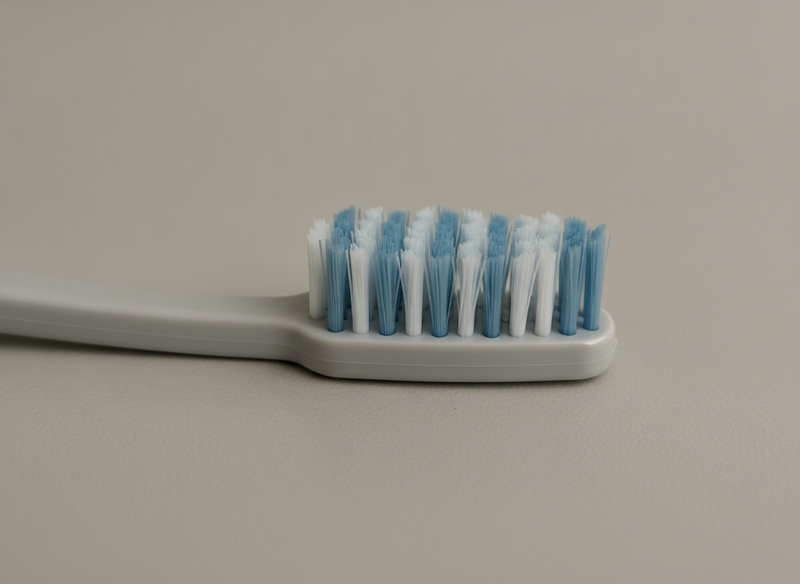
Nylon (standard)
Made from petroleum-based polymers. Cheap and consistent, but they do not biodegrade. Studies (Microchemical Journal, 2024) show that they shed microplastic particles during normal brushing.
Sheds microplastic (2024)Why SELVA
Not all toothbrushes are the same.
Most toothbrushes have bristles of nylon — including the "green" bamboo ones. A bamboo handle only solved half of it. Here is the difference, on concrete, documentable properties.
| Property | SELVA (horsehair / bamboo fibre) |
"Green" bamboo brush |
Ordinary plastic brush |
|---|---|---|---|
| Natural bristles (not nylon) | ✓ | ✕ | ✕ |
| Bamboo handle | ✓ | ✓ | ✕ |
| No nylon fibres anywhere | ✓ | ✕ | ✕ |
| Bristles free of synthetic plastic | ✓ | ✕ | ✕ |
| Handle can be composted | ✓ | ✓ | ✕ |
| Plaque removal (PMC, 2025) | Comparable | Comparable | Comparable |
Based on publicly available product information. The comparison is general and does not name specific competitors. Bamboo handles with nylon bristles are only partly biodegradable — the handle can be composted, the bristles cannot.
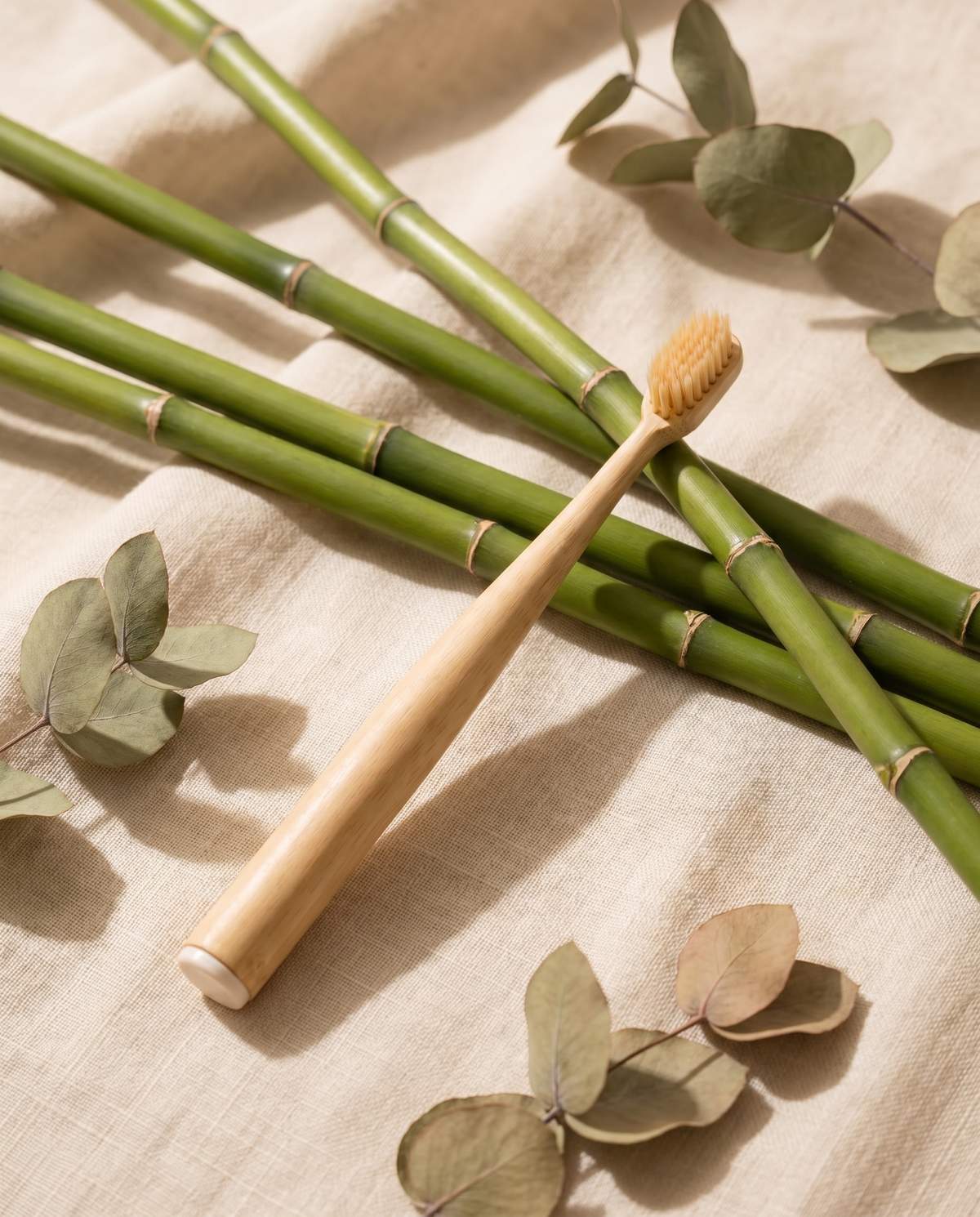
Bamboo
Why we chose bamboo
The handle on a SELVA toothbrush is made from bamboo — one of the fastest-growing plants in the world. It is a deliberate choice: we wanted a handle without a single piece of plastic.
The bamboo handle is biodegradable and can be composted once the bristles are worn out. An ordinary plastic handle, by contrast, will not break down in nature within any foreseeable time.
SELVA makes no health or antibacterial claims about bamboo. We share only factual material properties: the handle is made of bamboo, it contains no plastic, and it is biodegradable.
— SELVA's principle of provable marketingThe scientific basis
What does the research say?
In recent years a growing number of peer-reviewed studies have examined exposure to microplastic from toothbrushes. Here is what the research shows today.
2.3 million particles a year
Wang et al. (2025) found that a single plastic-based toothbrush can release up to 2.3 million microplastic particles per person per year.
Wang et al. (2025), Ecotoxicology and Environmental Safety.30–120 particles per brushing
Microchemical Journal (2024) found that every toothbrush tested shed microplastic — 39 on average, in a range of 30–120 per brushing.
Microchemical Journal (2024), simulated brushing.Microplastic in 80% of blood samples
Leslie et al. (2022) detected microplastic in 80% of the blood samples examined. The study documents widespread exposure — not a specific illness.
Leslie et al. (2022), Environment International, 163, 107199.Raman confirms fragmentation
Raman imaging (2023) confirmed that plastic brushes fragment and release particles during normal brushing. Nylon was the primary source.
Environmental Pollution (2023), Raman imaging.Bamboo cleans just as well
A comparative study (PMC, 2025) showed that bamboo toothbrushes had comparable effectiveness at plaque removal — on a par with conventional brushes.
PMC (2025), comparative plaque removal study.Total oral exposure
A systematic review (2024) estimated annual exposure from tooth brushing at around 48,910 particles per person. Exposure — not illness.
Ecotoxicology and Environmental Safety (2024).Reviews
Our customers say it better than we can
Choose your SELVA
Ready to switch?
Bamboo handle and natural bristles — horsehair (medium) or vegan bamboo fibre (soft). No plastic, no nylon.
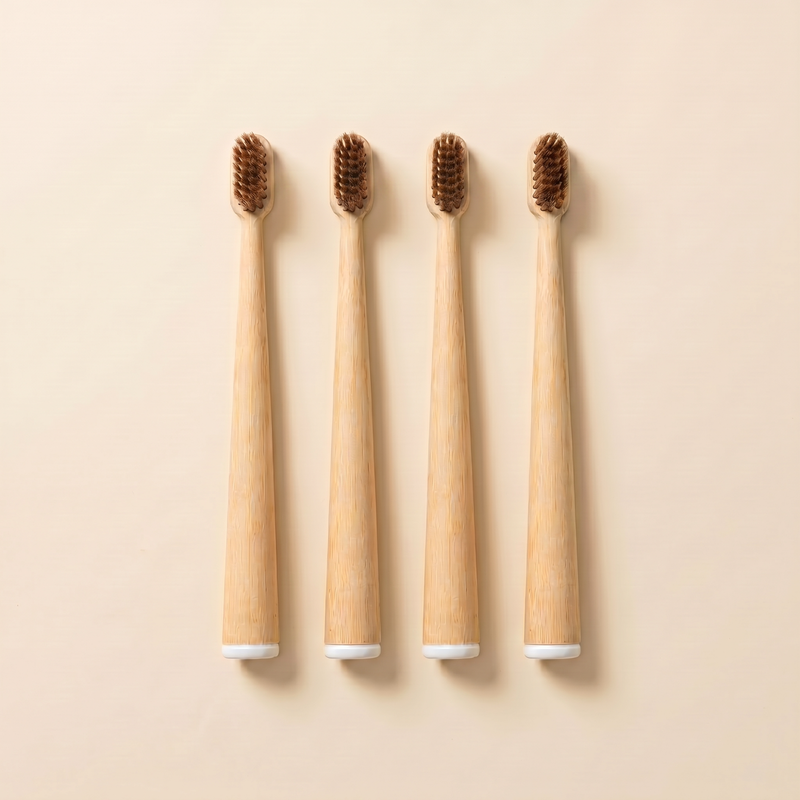
Horsehair & Bamboo
Horsehair — a medium fibre with a bit of bite. A thorough clean, and our most tested brush.
Vegan & Bamboo
Bamboo fibre instead of animal hair — the soft one, 100% plant-based. Same handle, same price, no nylon.
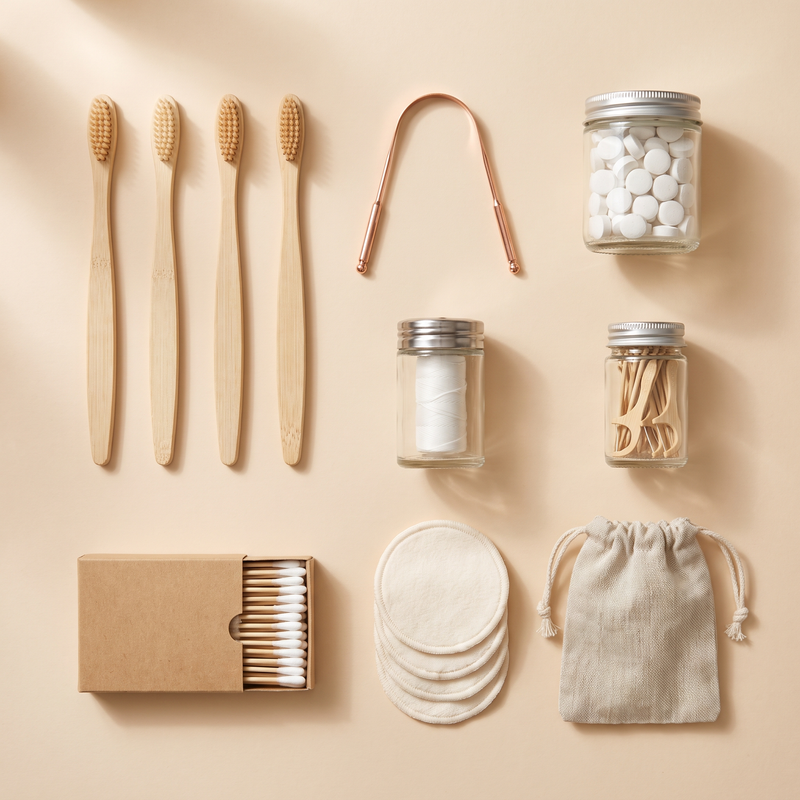
The Whole Bathroom
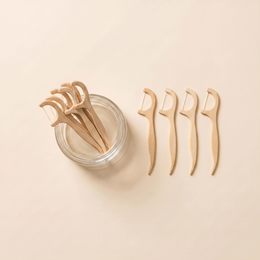
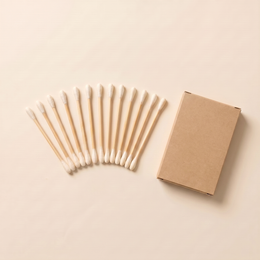
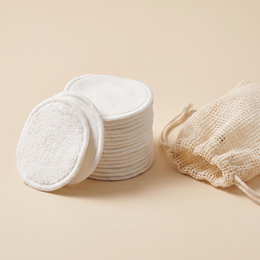
Seven plastic-free products in one box — the whole routine at once.
Gallery
SELVA in everyday life
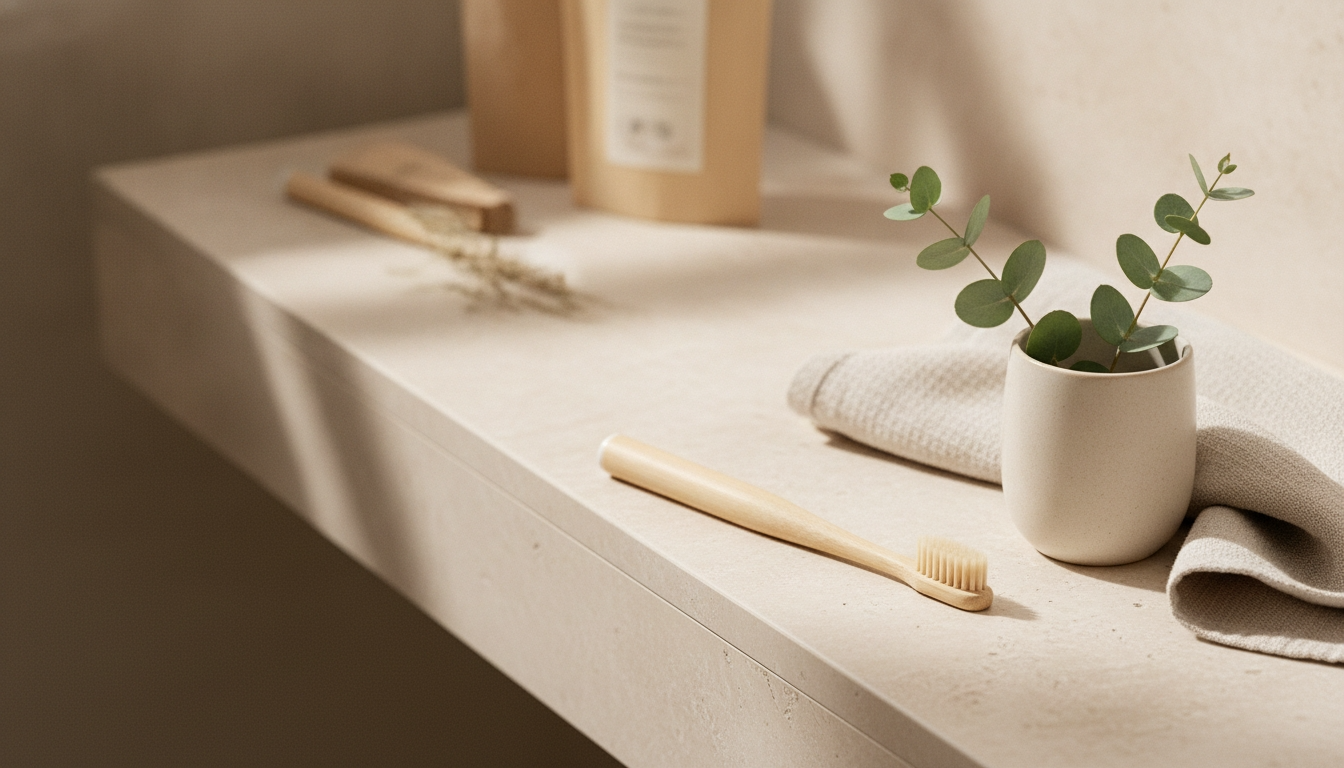
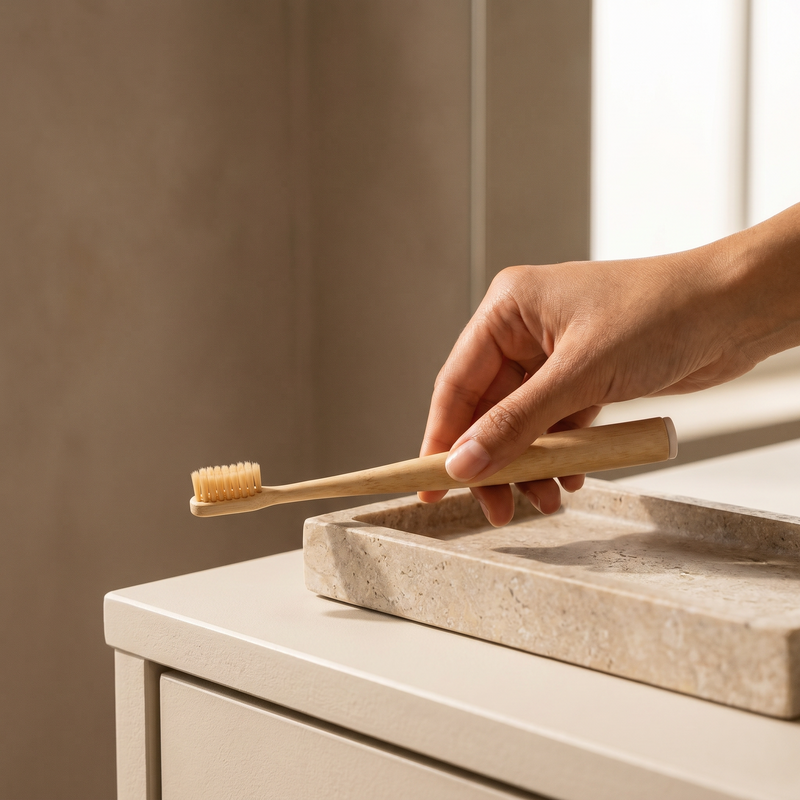
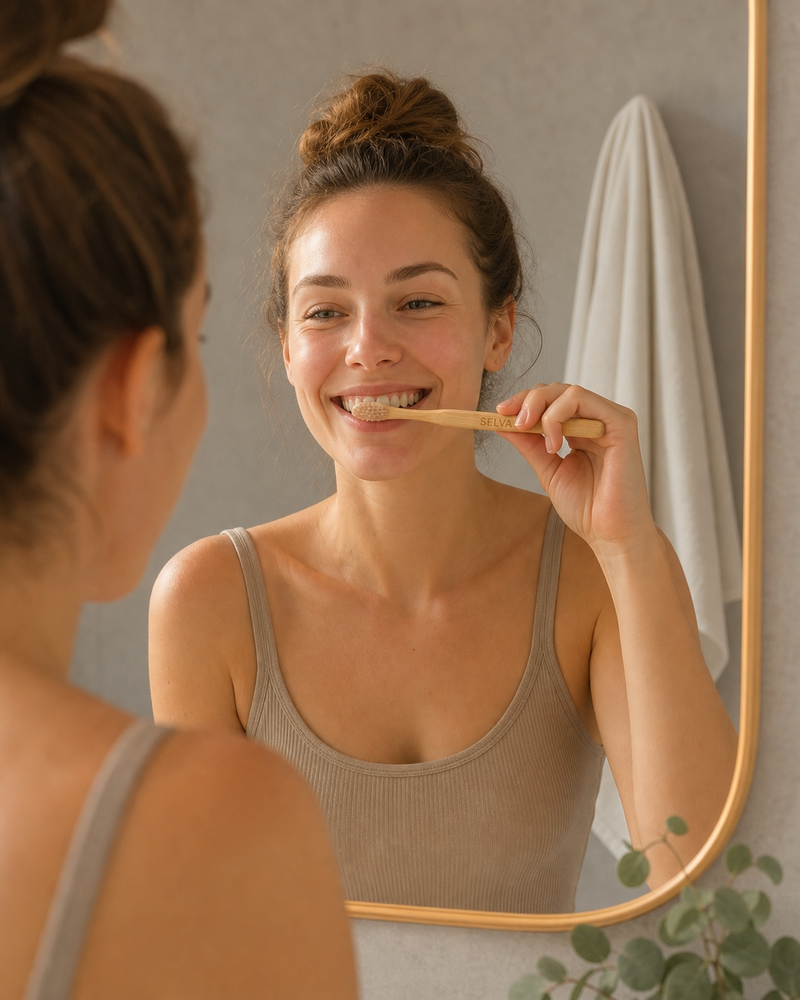
A look into everyday life with SELVA.

Scientific references
All references are from peer-reviewed journals. SELVA makes no medical health claims and does not claim that microplastic causes specific illnesses — the studies cited document exposure.
Ready to switch?
The science is ready. Are you?
A toothbrush with a bamboo handle and natural bristles — no nylon fibres, no synthetic plastic. Change one thing in the bathroom, and be done with it.